
Attic & Insulation
Attic Insulation for Bay Area Homes
Thin, compressed or missing insulation lets heat move freely between your rooms and the attic. We check what you have, explain what it needs, and install new insulation to an even, consistent depth.
Free inspection and written estimate before any work.
Problems we fix
Rooms too hot or cold
Upstairs rooms that overheat in summer or never warm up in winter often sit under thin or uneven insulation.
Thin or settled insulation
Older homes built before the 1980s often have only a few inches of insulation, and loose fill settles over time.
Rodent-damaged material
Rats and mice tunnel through insulation, flatten it and leave droppings and nesting material behind.
Heating and cooling running constantly
When heat leaks through the attic floor, the system has to run longer to hold the temperature you set.
Gaps and bare spots
Batts cut short, pushed aside for wiring or never fitted leave parts of the ceiling uncovered.
What the work includes
- Attic inspection of insulation depth, coverage and condition, plus signs of rodents and moisture
- Removal of old, contaminated or damaged insulation with commercial HEPA vacuum equipment when needed
- Cleaning and sanitizing the attic floor before new material goes in
- Air sealing at top plates, wiring and plumbing holes, light fixtures and the attic hatch
- Baffles at the eaves so new insulation does not block the soffit vents
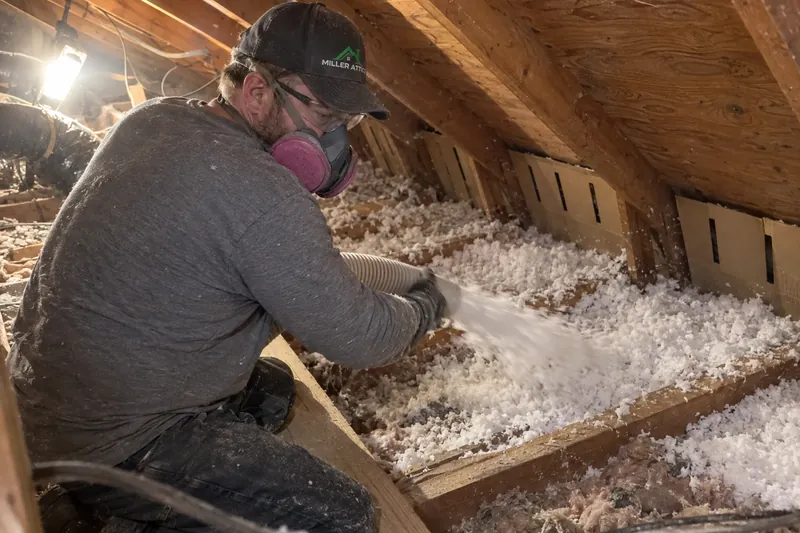
- Blown-in fiberglass, blown-in cellulose or batt installation to the agreed depth
- Insulating and weatherstripping the attic access
- Cleanup and a final walkthrough of the finished attic
Choosing the insulation material
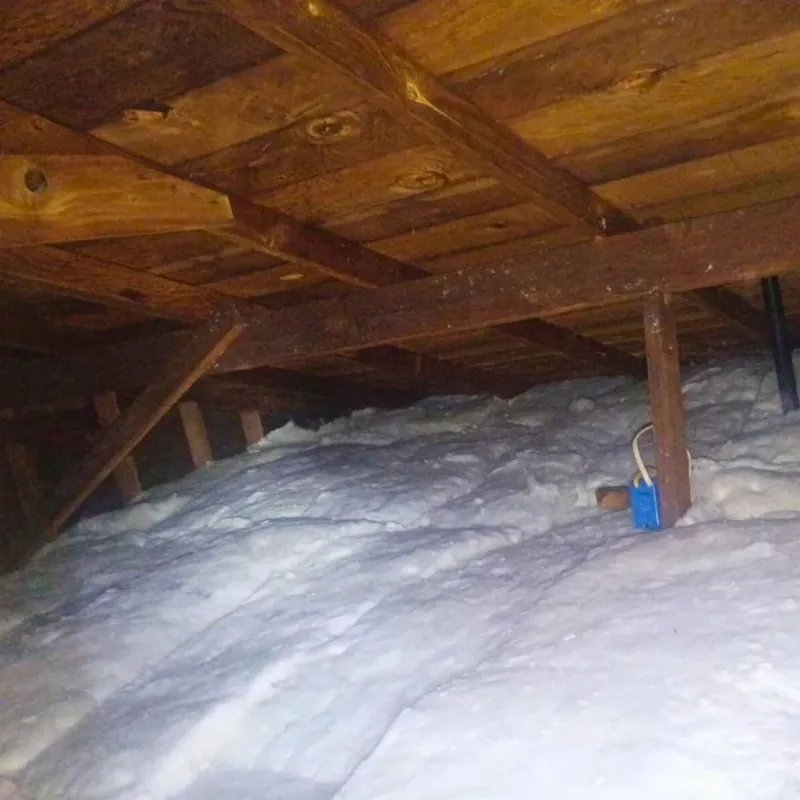
Most attics we work in are insulated with blown-in fiberglass, blown-in cellulose or batts. Each can work well. The choice depends on the attic’s layout, access and what is already there.
- Blown-in fiberglass: even coverage across open attic floors and around wiring and framing.
- Blown-in cellulose: a denser fill that works into small gaps and irregular spaces.
- Fiberglass or mineral wool batts: a clean fit in open, evenly spaced joist bays.
Why air sealing comes first
Insulation slows heat moving through it, but it does not stop air. Warm air escaping through gaps around wiring, plumbing, light fixtures and wall top plates carries heat straight past it.
Sealing those gaps before adding insulation lets the new layer do its job. It is also the practical moment to do it: once new insulation is in, the gaps are buried.
What the visit involves
- 1
Free attic inspection
We go into the attic, measure insulation depth, and look for rodent activity, moisture, air leaks and ventilation problems. Then we show you what we found.
- 2
Written estimate
You get a clear estimate listing what we recommend and why, whether that is a top-up, full replacement, air sealing or a combination.
- 3
Prep and protection
On the agreed day we protect the floors along the path to the attic access and keep the equipment outside where we can.
- 4
Install and walkthrough
We seal the gaps, install the new insulation to the agreed depth, clean up, and walk you through the finished work.
What homeowners say
5.0 rating on GoogleRead all 80 reviews (opens in a new tab)I had a fantastic experience with Miller Attics for pest services and crawl space encapsulation. Rafael provided the best quote, and the work was incredibly fast. He was super responsive, professional, and showed great attention to detail throughout the entire process. If you want quality work and a smooth experience, I highly recommend them!
Amazing experience! Very professional, quick and thorough. We had a basement cleanup needed due to a previous rodent problem, and Miller Attics completed the job swiftly and left the basement floor and all of our belongings perfectly clean and sanitized. When I went in the basement after the job was completed, it felt like a new space. I would absolutely use the again and recommend them to anyone who has a need for services they provide.
Rafael and his crew were prompt, clean, courteous and kind! Did an amazing job with our exclusion, attic cleaning and replacing our insulation. Highly recommend!
We had old degraded loose fill insulation that would never keep the house cool in the summer time. We called a couple of company but then our neighbors recommended Refael from Miller Attics so we gave him a call and we were not disappointed! He diagnosed all issues right away and thoroughly followed through with meticulous execution. Great crew and great customer service
Love these guys . Rafel was amazing and made sure all my questions were answered. He took care of the rodent issues and even came back for a second check to make sure everything was taken care of .
Great experience from start to finish! The crew was friendly, efficient, and paid attention to detail. They completed the job quickly without cutting corners, and everything was left clean and tidy. My home feels much better insulated now. Definitely worth it!
Questions homeowners ask
How much insulation does my attic need?
It depends on your climate zone, the attic’s layout and how much is already there. During the inspection we measure the existing depth and recommend a target R-value. Then we explain how much material it takes to reach it.
Can new insulation go over the old?
Often, if the existing insulation is clean, dry and not badly compressed. If it is contaminated by rodents, water-damaged or heavily settled, we recommend removing it first. We tell you which applies to your attic and why.
Should I choose blown-in insulation or batts?
Blown-in material covers irregular spaces and works around wiring, ducts and framing. Batts fit well where joist bays are open and evenly spaced. Many attics end up with blown-in coverage on the floor, with batts or rigid board at the hatch.
Do I need to leave the house during installation?
No. Most of the work happens in the attic, with hoses running from equipment outside. We protect the floors along the path to the attic access and clean up before we leave.
What if my old insulation might contain asbestos?
Some older homes have vermiculite or other loose fill that can contain asbestos. We do not remove asbestos, and nobody should disturb that material until it has been tested by a qualified lab. If we see it, we stop and explain the next steps.
What does the free inspection cover?
We check insulation depth and condition, signs of rodents and moisture, air leaks, ventilation and any ducts in the attic. You get a written estimate with no obligation.
Also in this section
Free inspection
Request an Attic Insulation Inspection
Tell us a little about your home and what you’ve noticed. We’ll get back to you to set up a time.
What happens after you send it
- 1We contact you to arrange a time for the free inspection.
- 2We inspect, take photos and explain what we found.
- 3You get a written estimate and decide what, if anything, to go ahead with.
7 days a week, 8:00 AM to 7:00 PM
We use your details only to arrange your inspection. Privacy policy