
Attic & Insulation
Attic Air Sealing
Warm air rises and escapes through dozens of small gaps in the attic floor, pulling outside air in through the rest of the house. We find those gaps and seal them, usually just before new insulation goes in.
Free inspection and written estimate before any work.
Problems we fix
Drafty rooms
Drafts near doors, outlets and ceiling fixtures often come from air being pulled through the house toward leaks in the attic.
Heat that doesn’t last
The heater runs and the house warms, then cools off quickly as warm air escapes upward.
Dark streaks in insulation
Gray or black patches in fiberglass mark spots where air has been filtering through for years.
Uneven room temperatures
Rooms under leaky ceilings or open wall cavities run warmer or colder than the rest of the house.
What the work includes
- Inspection of the attic floor for leaks at top plates, wiring, plumbing, ducts and fixtures
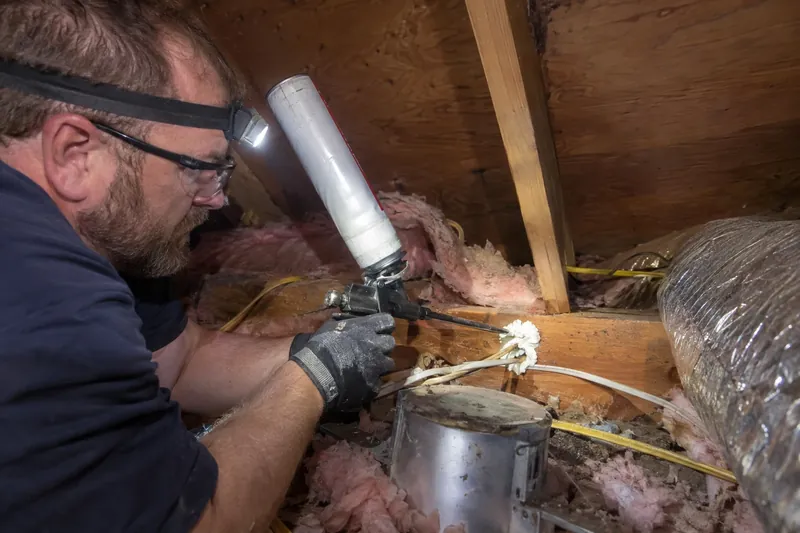
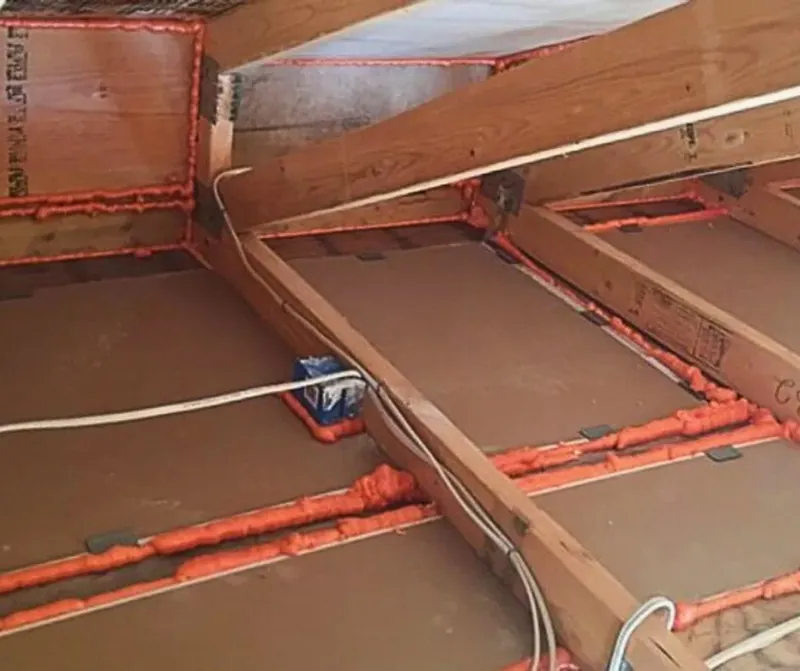
- Sealing small gaps and wire holes with fire-rated foam or caulk
- Covering large openings such as plumbing chases and dropped soffits with rigid board, sealed at the edges
- Metal flashing and high-temperature sealant around flues and chimneys, keeping the required clearance
- Checking recessed lights and sealing only fixtures rated for insulation contact
- Weatherstripping and insulating the attic hatch or pull-down stairs
- Confirming bath and laundry exhausts vent outside, not into the attic
Why insulation alone does not stop drafts
Fiberglass and cellulose slow heat moving through them, but air passes through them. Think of insulation as a wool sweater and air sealing as the windbreaker over it.
In a house, warm air rises and leaks out through the attic floor, and that pulls cooler outside air in lower down. This stack effect is why a leaky attic often shows up as drafts near floors and doors.
Where attic air leaks hide
Dirty, darkened insulation is the usual giveaway: it has been filtering air at that spot for years.
- Top plates where walls meet the ceiling drywall
- Holes for wiring, plumbing vents and pipes
- Plumbing chases and dropped soffits over kitchens and bathrooms
- Recessed lights and ceiling fixture boxes
- Duct boots and register openings
- Flues and chimneys
- The attic hatch or pull-down stairs
Sealing without creating new problems
A tighter attic floor changes how moisture moves. Bath, kitchen and dryer exhausts must vent outside, and soffit vents must stay open, or moist air can condense on the roof sheathing. We check both as part of the job.
Hot surfaces need noncombustible materials: metal flashing and high-temperature sealant, never standard foam. Recessed lights that are not rated for insulation contact are not foamed over.
What the visit involves
- 1
Find the leaks
In the attic we pull back insulation where needed and look for dirty filter marks, open top plates and unsealed penetrations.
- 2
Explain and estimate
We show you where the leaks are, explain what we would seal and with what, and give you a written estimate.
- 3
Seal the attic floor
We seal the gaps, cover large openings and treat hot flues with noncombustible materials.
- 4
Insulate and walk through
Sealing usually comes right before new or topped-up insulation. We show you what was sealed, clean up and walk you through it.
What homeowners say
5.0 rating on GoogleRead all 80 reviews (opens in a new tab)I had a fantastic experience with Miller Attics for pest services and crawl space encapsulation. Rafael provided the best quote, and the work was incredibly fast. He was super responsive, professional, and showed great attention to detail throughout the entire process. If you want quality work and a smooth experience, I highly recommend them!
Amazing experience! Very professional, quick and thorough. We had a basement cleanup needed due to a previous rodent problem, and Miller Attics completed the job swiftly and left the basement floor and all of our belongings perfectly clean and sanitized. When I went in the basement after the job was completed, it felt like a new space. I would absolutely use the again and recommend them to anyone who has a need for services they provide.
Rafael and his crew were prompt, clean, courteous and kind! Did an amazing job with our exclusion, attic cleaning and replacing our insulation. Highly recommend!
We had old degraded loose fill insulation that would never keep the house cool in the summer time. We called a couple of company but then our neighbors recommended Refael from Miller Attics so we gave him a call and we were not disappointed! He diagnosed all issues right away and thoroughly followed through with meticulous execution. Great crew and great customer service
Love these guys . Rafel was amazing and made sure all my questions were answered. He took care of the rodent issues and even came back for a second check to make sure everything was taken care of .
Great experience from start to finish! The crew was friendly, efficient, and paid attention to detail. They completed the job quickly without cutting corners, and everything was left clean and tidy. My home feels much better insulated now. Definitely worth it!
Questions homeowners ask
Should air sealing be done before insulation?
Yes. Once new insulation is in place, the gaps underneath are buried and hard to reach. Sealing first lets the insulation work as intended.
Is air sealing a separate job from insulation?
It can be, but it is usually done in the same project, right before new insulation is installed or existing insulation is topped up. That way the attic is only opened up once.
Can a house be sealed too tight?
Sealing the attic floor does not seal the house shut, but it does mean exhaust fans need to vent properly to the outside. We check bath, kitchen and dryer vents and keep the attic ventilation open as part of the work.
How will I know the sealing was done?
We show you the spots we sealed before the insulation goes back over them. Afterward, on a cold or windy day, check for drafts near doors, outlets and the attic hatch, and notice how often the heater runs.
Do you seal around recessed lights?
Only fixtures rated for insulation contact (IC-rated) are sealed and covered. Older fixtures without that label need clearance from insulation, so we explain the options, such as replacing the fixture, rather than foaming over it.
Free inspection
Request an Air Sealing Inspection
Tell us a little about your home and what you’ve noticed. We’ll get back to you to set up a time.
What happens after you send it
- 1We contact you to arrange a time for the free inspection.
- 2We inspect, take photos and explain what we found.
- 3You get a written estimate and decide what, if anything, to go ahead with.
7 days a week, 8:00 AM to 7:00 PM
We use your details only to arrange your inspection. Privacy policy