
Attic & Insulation
Attic Ventilation and Baffles
An attic needs a steady flow of outside air: in at the eaves, out near the ridge. When vents are blocked or missing, heat and moisture build up. We find what is restricting the airflow and fix it.
Free inspection and written estimate before any work.
Problems we fix
Blocked soffit vents
Insulation pushed into the eaves buries the intake vents, so outside air can’t get in.
A very hot attic
Without enough exhaust, summer heat builds up under the roof and radiates down into the rooms below.
Condensation on the sheathing
Moist air with nowhere to go condenses on the underside of the roof, leaving stains, damp insulation and mold growth.
Fans venting into the attic
Bathroom, kitchen or dryer exhausts that end in the attic dump moist air straight into it.
Collapsed or missing baffles
Old cardboard baffles sag and collapse under blown-in insulation, closing the air channel.
What the work includes
- Inspection of intake and exhaust vents, baffles, insulation at the eaves and signs of moisture
- Pulling insulation back from blocked soffits and clearing the vent openings
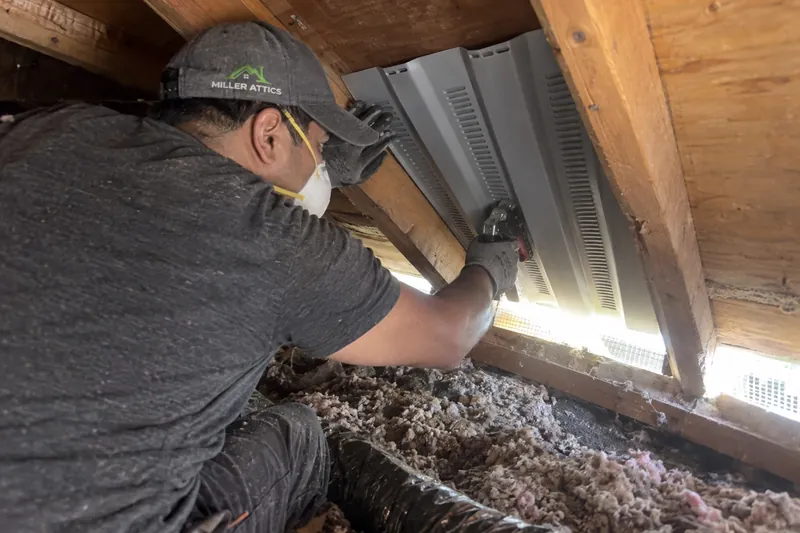
- Installing rigid plastic or foam baffles in every rafter bay with a soffit vent
- Adding or improving exhaust vents so intake and exhaust are balanced
- Attic fan installation where passive venting is not enough
- Rerouting bath and dryer exhaust ducts that end in the attic to the outside
- Screening vent openings with hardware cloth so rodents can’t use them
How attic ventilation works
Cooler outside air enters through soffit vents at the eaves, runs up under the roof deck, and leaves through ridge or upper roof vents. That flow carries heat out in summer and moisture out in winter.
It only works when intake and exhaust are both open and roughly balanced. A common rule of thumb is about one square foot of net free vent area for every 300 square feet of attic floor, split between low and high vents. The actual requirement depends on the roof and local code.
Baffles keep the eaves open
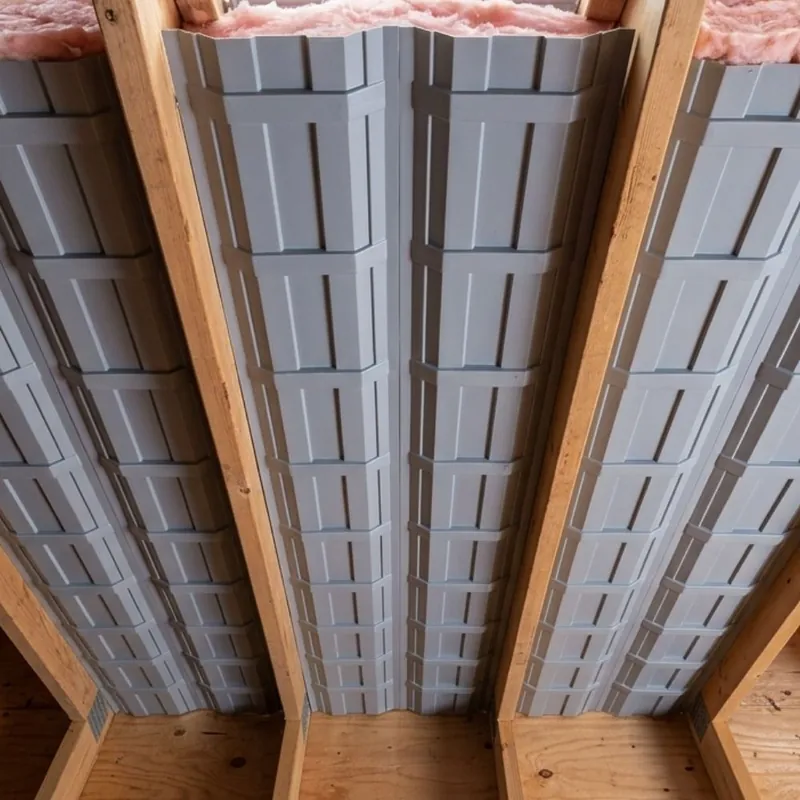
Baffles, also called rafter vents, are channels installed between the rafters at the eaves. They hold insulation back from the roof deck so air can pass from the soffit into the attic.
We use rigid plastic or foam baffles rather than cardboard, which absorbs moisture and collapses. Every rafter bay with a soffit vent gets one, so there are no dead spots where air stalls.
Passive vents or an attic fan?
Many attics ventilate well with passive vents once the intake is clear. Where an attic still runs very hot, a thermostat-controlled electric or solar-powered fan can help move air out.
A fan needs enough soffit intake to draw from. Otherwise it can pull conditioned air up from the house through ceiling leaks, which is one reason we pair ventilation work with air sealing.
What the visit involves
- 1
Check the airflow path
We look at the soffit, ridge and gable vents, the eaves from inside the attic, and any exhaust ducts ending in the attic.
- 2
Explain the fix
We show you what is blocked or missing and give you a written estimate for the changes.
- 3
Clear and install
We clear the eaves, install baffles, add or adjust vents and redirect exhaust ducts as agreed.
- 4
Insulate and walk through
Insulation goes back without blocking the eaves. We clean up and walk you through the result.
What homeowners say
5.0 rating on GoogleRead all 80 reviews (opens in a new tab)I had a fantastic experience with Miller Attics for pest services and crawl space encapsulation. Rafael provided the best quote, and the work was incredibly fast. He was super responsive, professional, and showed great attention to detail throughout the entire process. If you want quality work and a smooth experience, I highly recommend them!
Amazing experience! Very professional, quick and thorough. We had a basement cleanup needed due to a previous rodent problem, and Miller Attics completed the job swiftly and left the basement floor and all of our belongings perfectly clean and sanitized. When I went in the basement after the job was completed, it felt like a new space. I would absolutely use the again and recommend them to anyone who has a need for services they provide.
Rafael and his crew were prompt, clean, courteous and kind! Did an amazing job with our exclusion, attic cleaning and replacing our insulation. Highly recommend!
We had old degraded loose fill insulation that would never keep the house cool in the summer time. We called a couple of company but then our neighbors recommended Refael from Miller Attics so we gave him a call and we were not disappointed! He diagnosed all issues right away and thoroughly followed through with meticulous execution. Great crew and great customer service
Love these guys . Rafel was amazing and made sure all my questions were answered. He took care of the rodent issues and even came back for a second check to make sure everything was taken care of .
Great experience from start to finish! The crew was friendly, efficient, and paid attention to detail. They completed the job quickly without cutting corners, and everything was left clean and tidy. My home feels much better insulated now. Definitely worth it!
Questions homeowners ask
How do I know if my attic has a ventilation problem?
Common signs are a very hot attic and upper floor in summer, damp or stained roof sheathing, musty smells, and insulation packed tight against the eaves. The inspection checks each of these.
Do I need baffles if I’m only adding insulation?
If the attic has soffit vents, yes. Blown-in insulation easily drifts into the eaves and blocks them. Baffles keep the channel open so the new insulation doesn’t cut off the airflow.
Should I install an attic fan?
Not always. If the problem is blocked intake, clearing the soffits and adding baffles may be all the attic needs. We recommend a fan only when passive venting can’t keep up and there is enough intake for it to work properly.
Can my bathroom fan vent into the attic?
It shouldn’t. Exhaust fans need to vent to the outside through a roof or wall cap. Venting into the attic puts moist air where it can condense on the roof sheathing.
Does ventilation matter in the Bay Area’s mild climate?
Yes. Inland summers heat attics well above the outdoor temperature, and wet winters bring moisture that needs a way out. Near the coast, fog can keep a poorly vented attic damp for much of the year.
Free inspection
Request an Attic Ventilation Inspection
Tell us a little about your home and what you’ve noticed. We’ll get back to you to set up a time.
What happens after you send it
- 1We contact you to arrange a time for the free inspection.
- 2We inspect, take photos and explain what we found.
- 3You get a written estimate and decide what, if anything, to go ahead with.
7 days a week, 8:00 AM to 7:00 PM
We use your details only to arrange your inspection. Privacy policy