
Crawl Space & Moisture
Crawl Space Insulation Under Your Floors
Cold floors and drafty rooms often trace back to insulation under the house that has sagged, fallen or gotten wet. We remove what failed, deal with moisture, and install insulation suited to your crawl space.
Free inspection and written estimate before any work.
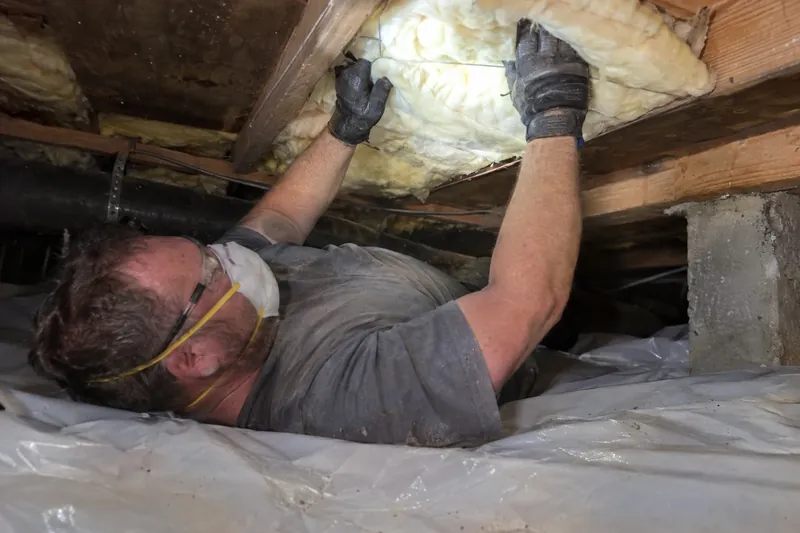
Problems we fix
Cold floors in winter
Without working insulation, the floor sits directly over cold crawl space air.
Sagging or fallen batts
Fiberglass batts that absorb moisture get heavy, pull away from the subfloor and drop to the ground.
Wet, moldy insulation
Insulation that stays damp stops insulating and holds moisture against the wood framing.
Rodent nesting
Loose insulation under the house is a favorite nesting spot for rats and mice.
What the work includes
- Inspecting the existing insulation, framing, moisture levels and vents
- Removing sagging, wet or contaminated insulation
- Confirming plumbing leaks are fixed and wood is dry before insulating
- Installing a vapor barrier over the soil where one is missing or damaged
- Insulating between floor joists with rigid foam board or properly supported batts
- Insulating foundation walls in sealed crawl spaces
- Sealing gaps around the edges and screening vents against rodents
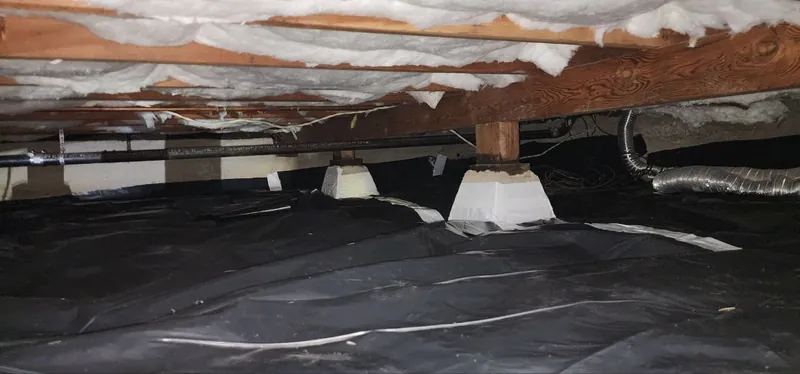
Choosing the right insulation for a crawl space
A crawl space is not an attic. Moisture rises from the soil, so the material has to tolerate damp air without sagging or soaking it up.
Fiberglass batts were the standard for years, and they are the ones we most often find hanging down or lying in the dirt. They can work in a dry crawl space with a good vapor barrier, if they are fully supported against the subfloor. Where moisture is a concern, rigid foam board, cut to fit between the joists and sealed at the edges, holds up better because it doesn’t absorb water.
Floor or foundation walls?
In a vented crawl space, insulation goes between the floor joists, keeping the cold below the floor.
In a sealed crawl space, with the vents closed, a vapor barrier on the ground and humidity controlled, the foundation walls are insulated instead. Which approach fits depends on your vents, ductwork, plumbing and moisture levels, and we explain the choice during the inspection.
Before new insulation goes in
Insulating over a problem traps it. We check these first:
- Plumbing leaks repaired and framing dry
- Soil covered with a vapor barrier, seams overlapped and taped
- Vents screened with metal mesh so rodents can’t move in
- Water supply lines kept on the warm side of the new insulation
What the visit involves
- 1
Look under the house
We check the insulation, take moisture readings on the framing, and photograph the condition of the space.
- 2
Material recommendation
We explain which insulation fits your crawl space and why, and give you a written estimate.
- 3
Remove and prepare
We remove the old insulation and make sure the soil is covered and the framing is dry before anything new goes up.
- 4
Install and check
We install and secure the new insulation, seal the edges, clean up, and show you photos of the finished work.
What homeowners say
5.0 rating on GoogleRead all 80 reviews (opens in a new tab)I had a fantastic experience with Miller Attics for pest services and crawl space encapsulation. Rafael provided the best quote, and the work was incredibly fast. He was super responsive, professional, and showed great attention to detail throughout the entire process. If you want quality work and a smooth experience, I highly recommend them!
Amazing experience! Very professional, quick and thorough. We had a basement cleanup needed due to a previous rodent problem, and Miller Attics completed the job swiftly and left the basement floor and all of our belongings perfectly clean and sanitized. When I went in the basement after the job was completed, it felt like a new space. I would absolutely use the again and recommend them to anyone who has a need for services they provide.
Rafael and his crew were prompt, clean, courteous and kind! Did an amazing job with our exclusion, attic cleaning and replacing our insulation. Highly recommend!
We had old degraded loose fill insulation that would never keep the house cool in the summer time. We called a couple of company but then our neighbors recommended Refael from Miller Attics so we gave him a call and we were not disappointed! He diagnosed all issues right away and thoroughly followed through with meticulous execution. Great crew and great customer service
Love these guys . Rafel was amazing and made sure all my questions were answered. He took care of the rodent issues and even came back for a second check to make sure everything was taken care of .
Great experience from start to finish! The crew was friendly, efficient, and paid attention to detail. They completed the job quickly without cutting corners, and everything was left clean and tidy. My home feels much better insulated now. Definitely worth it!
Questions homeowners ask
Is fiberglass bad for crawl spaces?
Not by itself, but it is the material we see fail most often under houses. It absorbs moisture, gets heavy and falls out of the joists. If the crawl space is dry and the batts are properly supported, it can work; in damp crawl spaces we usually recommend rigid foam board.
Do I need a vapor barrier too?
In most crawl spaces, yes. Without one, moisture keeps rising from the soil into the space and into the new insulation. We often install the vapor barrier and insulation as one job.
What about spray foam?
Closed-cell spray foam doesn’t absorb water and fills around pipes and awkward framing. Open-cell foam is soft and holds moisture, so it doesn’t belong under a house. We’ll tell you whether foam makes sense for your crawl space or whether board or batts will do the job.
Will insulating the floor make a noticeable difference?
Homes with missing or fallen crawl space insulation usually have noticeably cold floors in winter. Restoring it keeps more of your heat in the rooms above, especially over bedrooms and hardwood floors.
Can you insulate if there are rodents under the house?
We deal with the rodents first: cleanup, then sealing entry points and vents. New insulation in a crawl space that rodents can still reach just becomes new nesting material.
Free inspection
Request a Crawl Space Insulation Inspection
Tell us a little about your home and what you’ve noticed. We’ll get back to you to set up a time.
What happens after you send it
- 1We contact you to arrange a time for the free inspection.
- 2We inspect, take photos and explain what we found.
- 3You get a written estimate and decide what, if anything, to go ahead with.
7 days a week, 8:00 AM to 7:00 PM
We use your details only to arrange your inspection. Privacy policy