
After crawling through attics, navigating tight crawl spaces, and hauling heavy negative air machines into cramped laundry rooms for over two decades, I can confidently tell you that lint is a homeowner’s silent enemy. As a veteran in the ventilation and insulation industry, I have seen firsthand how a seemingly harmless buildup of cotton fibers and pet hair can turn a major appliance into a severe fire hazard. Finding a reliable dryer vent cleaning service isn’t just about cutting down your utility bills—though that is a massive benefit—it is fundamentally about protecting your property and your family. In this comprehensive guide, I am going to pull back the curtain on the venting industry, sharing the exact diagnostics, professional tools, and field-tested strategies I use every day to restore optimal airflow to residential and commercial laundry systems.
How do I know if I need a professional dryer vent cleaning service?
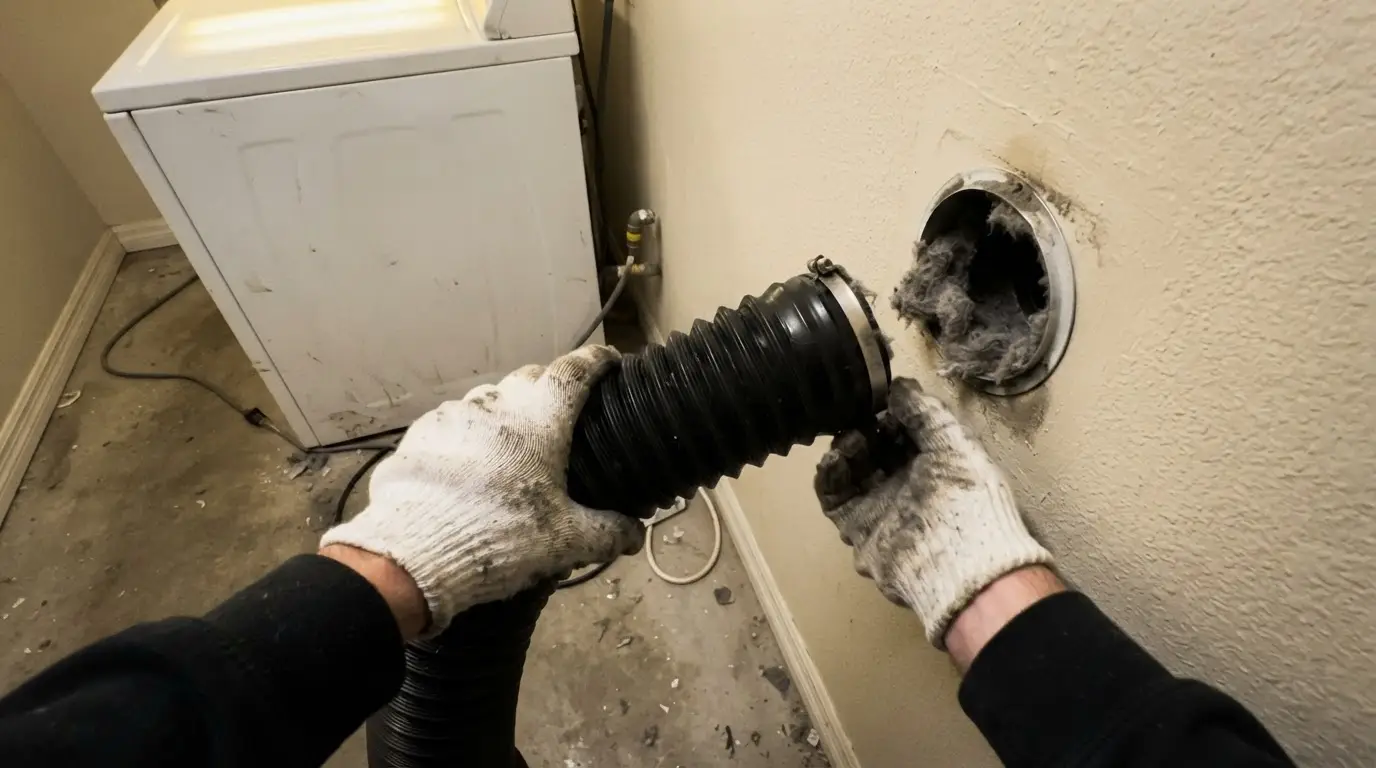
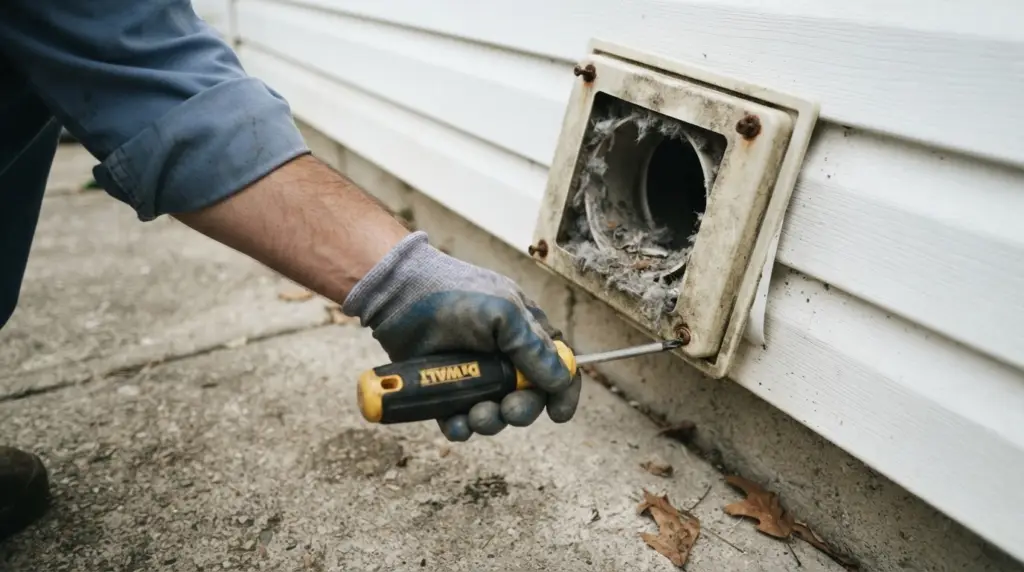
You know you need a professional cleaning when your clothes take longer than one 45-minute cycle to dry, the exterior of the appliance feels exceptionally hot to the touch, or you notice a musty, burning odor lingering in your laundry room. When your dryer exhausts damp, hot air, that moisture binds with microscopic fabric fibers to create a dense, heavy sludge that sticks to the walls of your ductwork. Over time, this restricts the transition hose and the main trunk line, drastically increasing static pressure. I always bring my Testo 410i digital vane anemometer to service calls. Just last week, I visited a home where the homeowner complained her towels took three hours to dry. I measured the exhaust velocity at the exterior wall hood, and it was registering a dismal 150 FPM (feet per minute). A healthy, unobstructed line should push between 1,200 and 1,500 FPM. After deploying our professional dryer vent cleaning service, which involved removing a dense, two-foot-long obstruction of pet hair and calcified lint, the velocity shot up to 1,350 FPM. The homeowner called me the next day to report her towels were drying in under forty minutes. Recognizing these early warning signs—including excessive lint left on clothing or a lint trap that seems unusually empty because the debris is being pushed past it—can save you from a catastrophic thermal event.
What is the average cost of a professional dryer vent cleaning?
The average cost of a professional dryer vent cleaning ranges from $125 to $300, heavily depending on the linear footage of the duct, the accessibility of the exhaust termination, and the severity of the lint or pest blockage. Pricing in this industry isn’t just pulled out of thin air; it is calculated based on risk, equipment wear-and-tear, and labor time. If you have a standard four-foot rigid transition duct venting directly out the side of a first-floor wall, you will be on the lower end of that spectrum. However, if your laundry room is situated in the center of your home, requiring a 25-foot vertical run through the attic to a rooftop termination with a bird guard, the price increases. Roof access requires harness safety gear, specialized 30-foot flexible fiberglass rods, and often, the removal of stubborn bird nests baked into the termination cap.
| Service Type & Complexity | Average Price Range | Key Cost Factors |
|---|---|---|
| Standard Wall-Vented Cleaning (1st Floor) | $125 – $175 | Short run (under 10 feet), easy ground-level exterior access, minimal blockages. |
| Attic / Second-Story Roof Termination | $175 – $250 | Vertical gravity drops, roof harness safety requirements, extended fiberglass rods. |
| Severe Clogs / Pest Nest Removal | $250 – $350+ | Requires pneumatic whips, HEPA negative air machines, and physical nest extraction. |
Here is an insider’s tip to save money: always bundle your ventilation maintenance. Many contractors will offer a significant discount if you book a dryer duct sweep at the same time as a routine HVAC duct sanitation. Furthermore, always check your transition hose behind the unit. If you are using that cheap, white vinyl accordion foil, throw it away immediately—it is a fire code violation in most municipalities. Spend $20 on a semi-rigid aluminum transition hose. It traps less lint, reducing the frequency with which you’ll need to call a technician like me.
How does a professional remove deep lint clogs from a dryer vent?
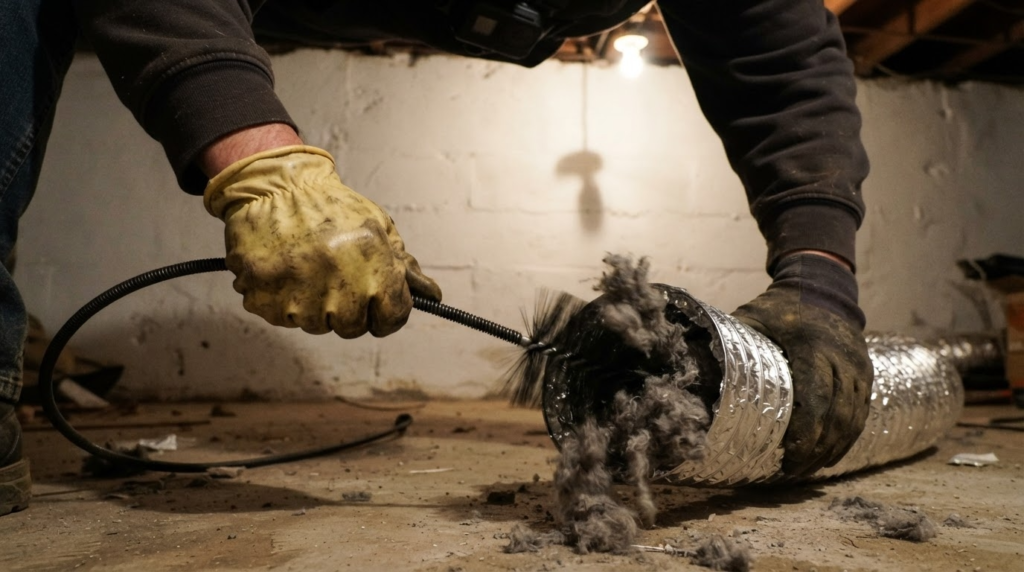
A professional removes deep lint clogs using a combination of pneumatic air whips driven by a high-PSI compressor and a rotary brush system attached to a powerful HEPA-filtered negative air machine. As an industry veteran, I cringe when I see DIYers using cheap plastic drill attachments they bought from a big-box hardware store. Those flimsy plastic rods frequently snap inside the wall, turning a routine sweep into a massive drywall demolition project. My rig consists of a 200 PSI industrial air compressor feeding a reverse-blowing “skipper ball.” This pneumatic tool blasts high-pressure air backward, physically scouring the galvanized steel walls of the rigid duct and propelling the dense, compacted lint toward my extraction hose. For heavy, wet blockages—usually caused by a failed backdraft damper allowing rainwater into the pipe—I switch to a heavy-duty nylon rotary brush spun by a variable speed drill, paired with a 3,500 CFM (Cubic Feet per Minute) negative air vacuum. This ensures that the toxic, dusty particulate doesn’t blow back into your clean laundry room. I recently worked on a townhome where the builder used sheet metal screws to join the ducting instead of aluminum foil tape. Lint had snagged on every single screw thread, creating a massive 15-foot restriction. It took 150 PSI of compressed air and three passes with my stiff-bristled rotary whip to finally clear the line, dropping the internal static pressure from a dangerous 1.5 inches of water column (inWC) down to a safe 0.4 inWC.
Can a clogged dryer vent impact other HVAC systems or air ducts?
Yes, a severely clogged dryer vent can indirectly impact your broader HVAC system by causing extreme heat buildup in the laundry area, forcing your air conditioning to work harder, and creating negative pressure zones that pull polluted air into your living spaces. Your home operates as a complex building envelope. When a dryer line is 90% blocked, the appliance struggles to exhaust 200 cubic feet of hot, humid air per minute. Instead of pushing that moisture outside, it leaks out of the back of the machine, dramatically raising the relative humidity and ambient temperature of your laundry room. Your home’s thermostat senses this heat, causing your AC compressor to cycle on prematurely and run longer, spiking your energy bills. Furthermore, the excess moisture can lead to rapid mold growth on the drywall behind the appliance, compromising your indoor air quality. I have often been called to homes for what the owner thought was a central air conditioning failure, only to trace the thermal imbalance back to a blocked laundry exhaust. This interconnectedness is why I highly recommend having your whole-home ventilation evaluated simultaneously; in fact, pairing this maintenance with a professional air duct cleaning ensures that your entire thermal envelope is breathing correctly and efficiently.
Ultimately, neglecting your exhaust lines is a gamble that simply isn’t worth the risk. The physics of airflow and thermal dynamics dictate that restricted airflow will inevitably lead to component failure, skyrocketing utility costs, and extreme fire hazards. By understanding the diagnostic metrics, the professional tools used in the trade, and the actual mechanics of proper ventilation, you can make informed decisions about your home maintenance. Don’t wait until your thermal fuse blows or you smell smoke. Scheduling a routine, professional dryer vent cleaning service is the single most cost-effective way to extend the lifespan of your appliance, protect your home’s infrastructure, and keep your household safe year-round.