
When I first started researching home insulation options, I kept seeing that distinctive pink color everywhere. Whether I was watching DIY videos, visiting hardware stores, or talking to contractors, pink insulation seemed to dominate the market. But like many homeowners, I found myself asking: is pink insulation dangerous? Should I be worried about having it in my home or handling it during a renovation project?
After extensive research and conversations with building professionals, I want to share everything I’ve learned about pink insulation safety. The answer isn’t as simple as yes or no—it depends on the type of pink insulation you’re dealing with and how you’re interacting with it.
Understanding What Pink Insulation Actually Is
Before I dive into safety concerns, I need to clarify what we’re actually talking about. When people say “pink insulation,” they’re usually referring to one of two completely different products made by Owens Corning, a major insulation manufacturer.
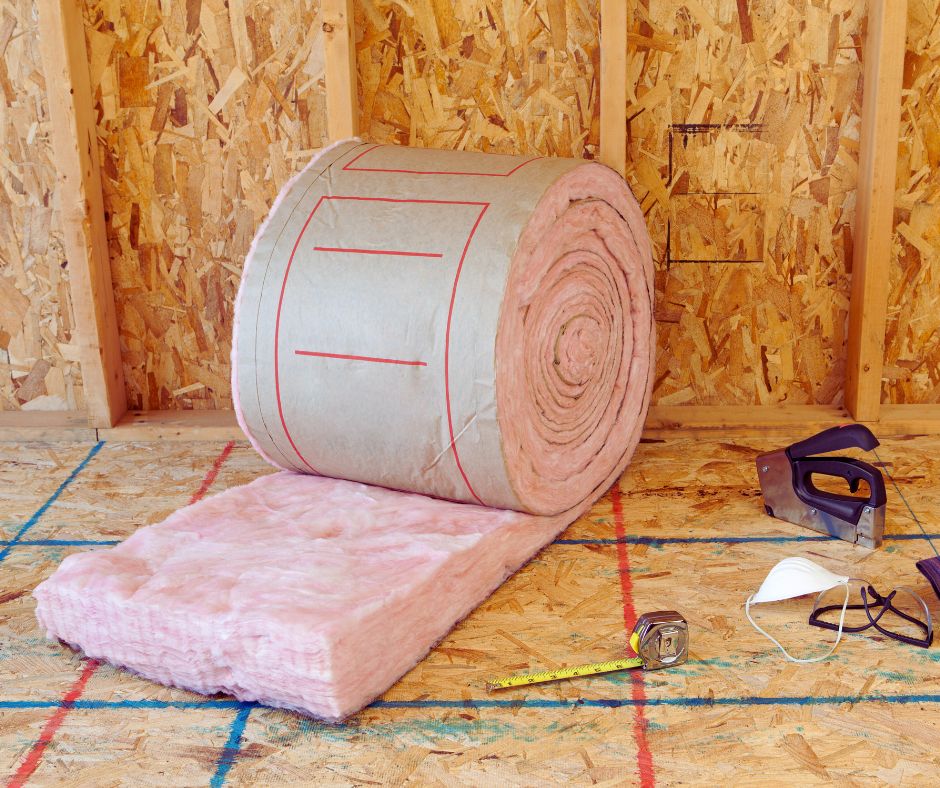
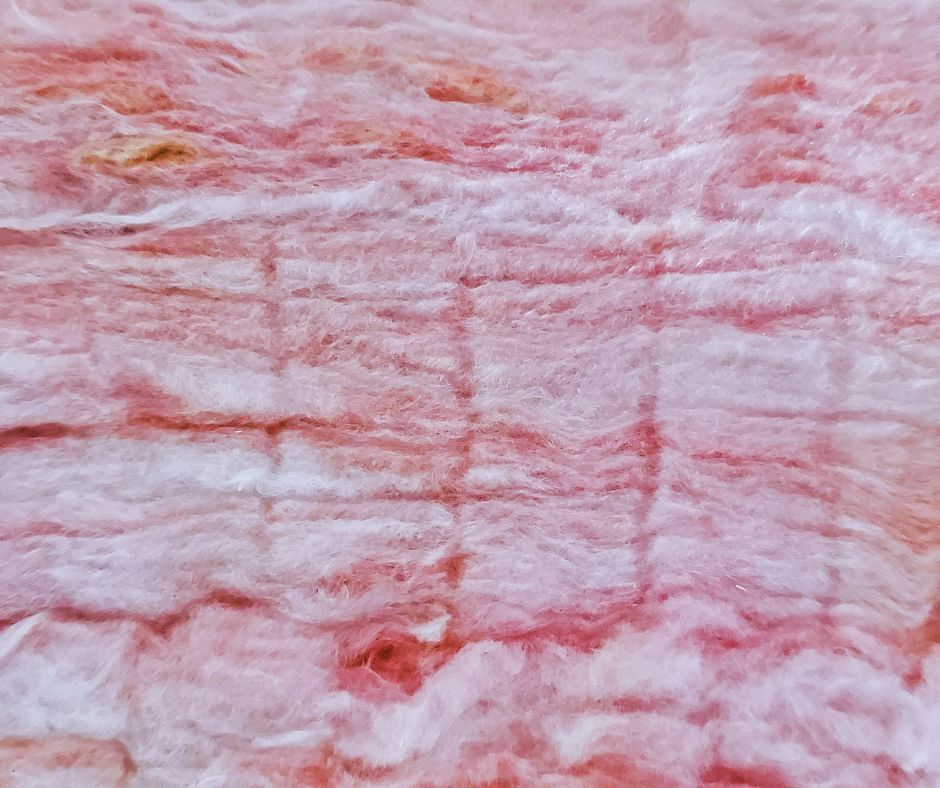
The first type is pink fiberglass insulation—those fluffy, cotton candy-like batts and rolls you’ve probably seen in attics. This material is made from recycled glass and sand that’s been melted down and spun into fine fibers. The pink color is simply Owens Corning’s trademark branding, dating back to 1956.
The second type is pink insulation foam, also called pink insulation board. This is a rigid foam panel made from extruded polystyrene (XPS), sold under the brand name FOAMULAR. It comes in flat sheets, typically 4 feet by 8 feet, and feels completely different from fiberglass—smooth, firm, and easy to cut.
I’ve worked with both types, and they have very different safety profiles that I’ll explain below.
Is Pink Insulation Dangerous? The Fiberglass Version
When most people ask “is pink insulation dangerous,” they’re usually thinking about the fiberglass type. I remember the first time I helped insulate an attic—within minutes, my arms were itching like crazy. So yes, pink fiberglass insulation can cause discomfort, but is it actually dangerous?
The honest answer is that pink insulation made from fiberglass poses minimal health risks when you understand how to handle it properly. The main concerns I’ve experienced and researched include skin irritation, respiratory issues, and eye problems—but these are all temporary and manageable.
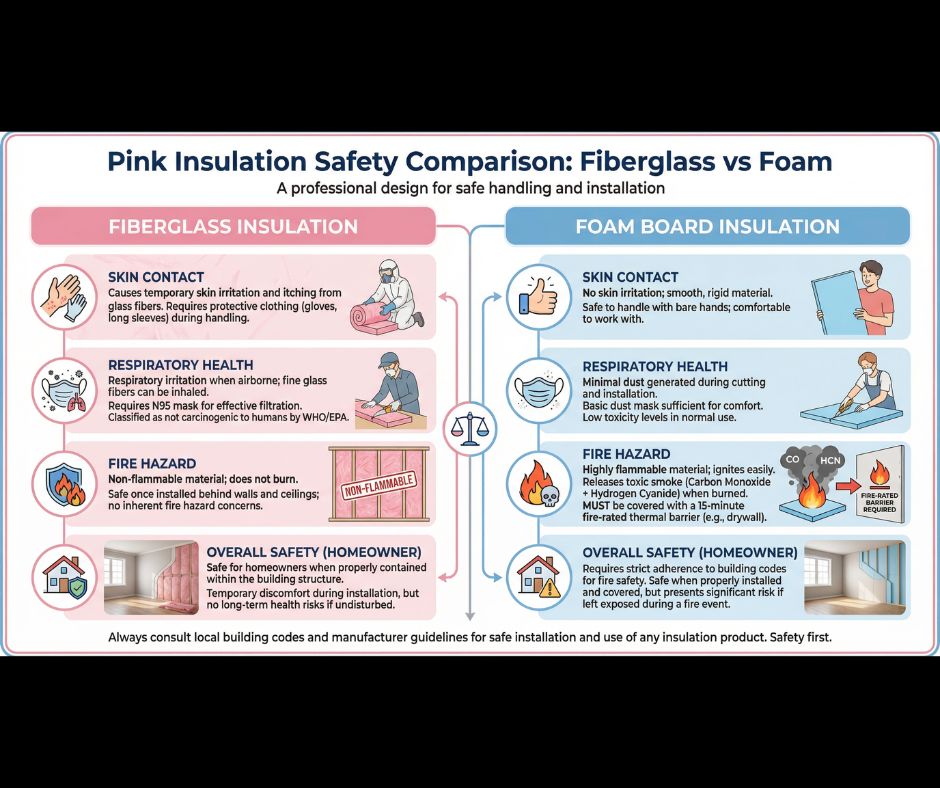
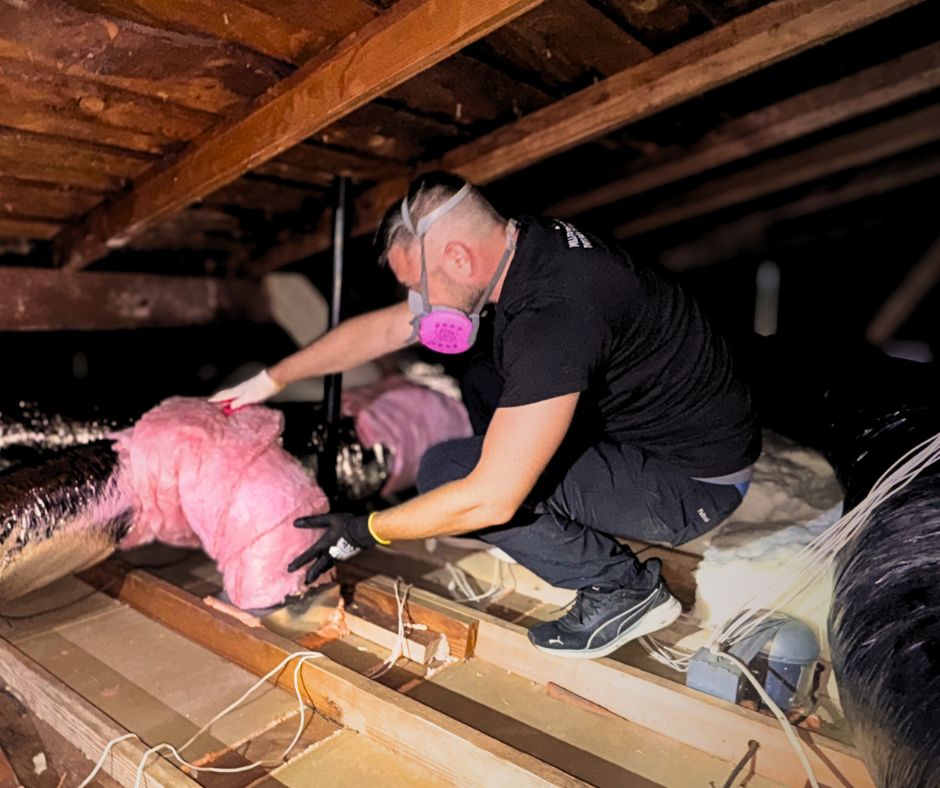
When I handle pink insulation without proper protection, those tiny glass fibers stick to my skin and cause itching, redness, and sometimes a rash. It’s uncomfortable but not dangerous. The fibers don’t penetrate deep into the skin, and the irritation goes away once I wash thoroughly with soap and water. I’ve learned to always wear long sleeves, gloves, and pants when working with this material.
Respiratory irritation is another concern I take seriously. When pink insulation is disturbed—especially during installation or removal—it releases airborne fibers that can irritate your throat, nose, and lungs. I’ve experienced the scratchy throat and coughing that comes from breathing these fibers. That’s why I always wear an N95 mask when working with pink insulation in enclosed spaces.
Here’s what really matters: major health organizations, including the World Health Organization and the EPA, do not classify fiberglass insulation as carcinogenic. Earlier concerns about cancer risks have been largely dismissed by modern research. Once pink insulation is properly installed and contained behind walls or in your attic, it poses no health risks to you or your family.
Pink Insulation Foam: A Different Safety Profile
Pink insulation foam, or pink insulation board, has completely different safety considerations. I find this material much easier and more comfortable to work with than fiberglass—there are no itchy fibers to worry about. However, it does present its own concerns, particularly around fire safety.
The biggest issue I want to emphasize about pink insulation board is that it’s flammable. When XPS foam burns, it releases toxic smoke containing carbon monoxide and hydrogen cyanide. This is why building codes require that pink insulation foam be covered with fire-rated materials like drywall when used in living spaces. I never leave pink insulation board exposed in areas where people spend time.
When I cut pink insulation foam, it produces a fine dust. While this dust isn’t as irritating as fiberglass, I still wear a dust mask to avoid inhaling it. I’ve also learned never to use hot wire cutters indoors—melting the foam releases toxic fumes that I definitely don’t want to breathe.
One advantage I appreciate about pink insulation board is that it doesn’t cause the skin irritation that fiberglass does. I can handle it with bare hands without any discomfort. However, I’m careful to keep it away from petroleum products and certain solvents that can damage the foam.
My Safety Recommendations for Working with Pink Insulation
Based on my experience, I’ve developed a simple safety protocol that I follow every time I work with pink insulation, whether it’s fiberglass or foam.
For pink fiberglass insulation, I always wear protective clothing including long sleeves, long pants, gloves, and eye protection. I use an N95 respirator mask, especially when working in poorly ventilated spaces like attics or crawl spaces. After I finish working, I shower immediately and wash my work clothes separately from other laundry. I’ve found that using cold water helps prevent the fibers from setting into the fabric.
For pink insulation board, my requirements are simpler. I wear a basic dust mask when cutting the foam, and I always ensure I have proper fire barriers in place. I keep my workspace well-ventilated and avoid using any heat tools that could melt the foam.
The Bottom Line: Living Safely with Pink Insulation
After all my research and hands-on experience, I can confidently say that pink insulation—both fiberglass and foam—is safe for your home when properly installed. The key word here is “properly.”
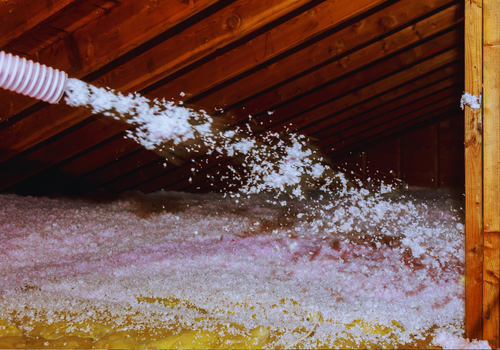
If you have pink insulation already installed in your home, you have nothing to worry about. Once it’s contained behind walls, above ceilings, or in your attic space, it poses no health risks to you or your family. The insulation does its job quietly and safely, reducing your energy bills without affecting your health.
The temporary risks I’ve discussed—skin irritation from fiberglass or fire hazards from foam—only become relevant when you’re actively handling or installing the material. And even then, these risks are easily managed with basic protective equipment and common sense precautions.
I’ve worked with many types of insulation over the years, and I can tell you that pink insulation is actually less hazardous than many alternatives. Unlike asbestos insulation (which is now banned), pink insulation doesn’t cause serious long-term health problems. Compared to some other insulation products that contain formaldehyde, pink insulation is a safer choice for indoor air quality.
So is pink insulation dangerous? My answer is no—not when you understand what you’re working with and take appropriate precautions. Whether you’re considering pink insulation for a new construction project, planning a DIY installation, or simply wondering about the insulation already in your home, you can rest easy knowing that this popular building material has a strong safety record when used correctly.
I encourage you to follow the safety guidelines I’ve outlined, consult with professionals when needed, and make informed decisions about your home’s insulation needs. Pink insulation has earned its popularity not just because of its distinctive color, but because it’s an effective, reliable, and safe insulation solution for millions of homes.